
Socorro City Directory Collections
Socorro did not produce a separate, continuous city-directory series in the material located for this research. The useful shelf is the larger El Paso directory system, where Socorro and nearby Lower Valley people or addresses may appear under regional labels. Start with the digitized run when a surname, street, or year is known. Then use the library and historical collections for volumes that are not fully online. This approach is more reliable than assuming a missing Socorro heading means that a household was absent from the region.
| Collection | Years | Where held | Access |
|---|---|---|---|
| UTEP El Paso city directories | 1885–1906 itemized; links through 1922 | UTEP Special Collections | Digitized OCR and page images |
| Portal to Texas History directories | 1922 El Paso sample; collection spans 18 decades | UNT Portal | Free images and OCR |
| Border Heritage reference holdings | Exact shelf runs not fully published | El Paso Public Library Main Library | On-site reference and remote staff help |
| Historical Society directories | 1886–2011 reported; selected Polk runs after 1923 | Burges House collection | Collection consultation |
The years are uneven by collection. A gap may reflect a missing volume, a different publisher, a volume not yet digitized, or coverage that placed a Socorro address under a broader El Paso description. The UTEP directory collection is the clearest place to identify early publishers and volumes. For a known address, check both the personal-name pages and the street section before treating a negative result as final.
Note: Record the publication year and exact page because directory compilation and census enumeration do not occur on the same date.
Socorro City Directories at UTEP
UTEP Special Collections supplies the most specific early inventory for Socorro city-directory work. Its digitized series identifies Rackliff & Wainey in 1885, C. A. Gould & Co. in 1886–87, El Paso Directory Co. in 1888 and 1889, then successive El Paso and Juarez, McDevitt, Evans & Worley, Worley, Buck's, and John F. Worley volumes through 1906. A 1904 book is divided into personal-name files and a business directory. That arrangement matters when an OCR search fails because a reader can move to the correct alphabetic file instead of assuming the person is missing.
The digitized UTEP directories also point researchers toward volumes through 1922 at the Portal to Texas History. The project was supported by the El Paso County Historical Society, while UTEP and the library supplied examples. Those connected institutions give a Socorro researcher an online start, a physical reference route, and archival context when one book leaves a question unanswered.
UTEP's digitized directory collection shows the year-and-publisher listing that supports this regional route.
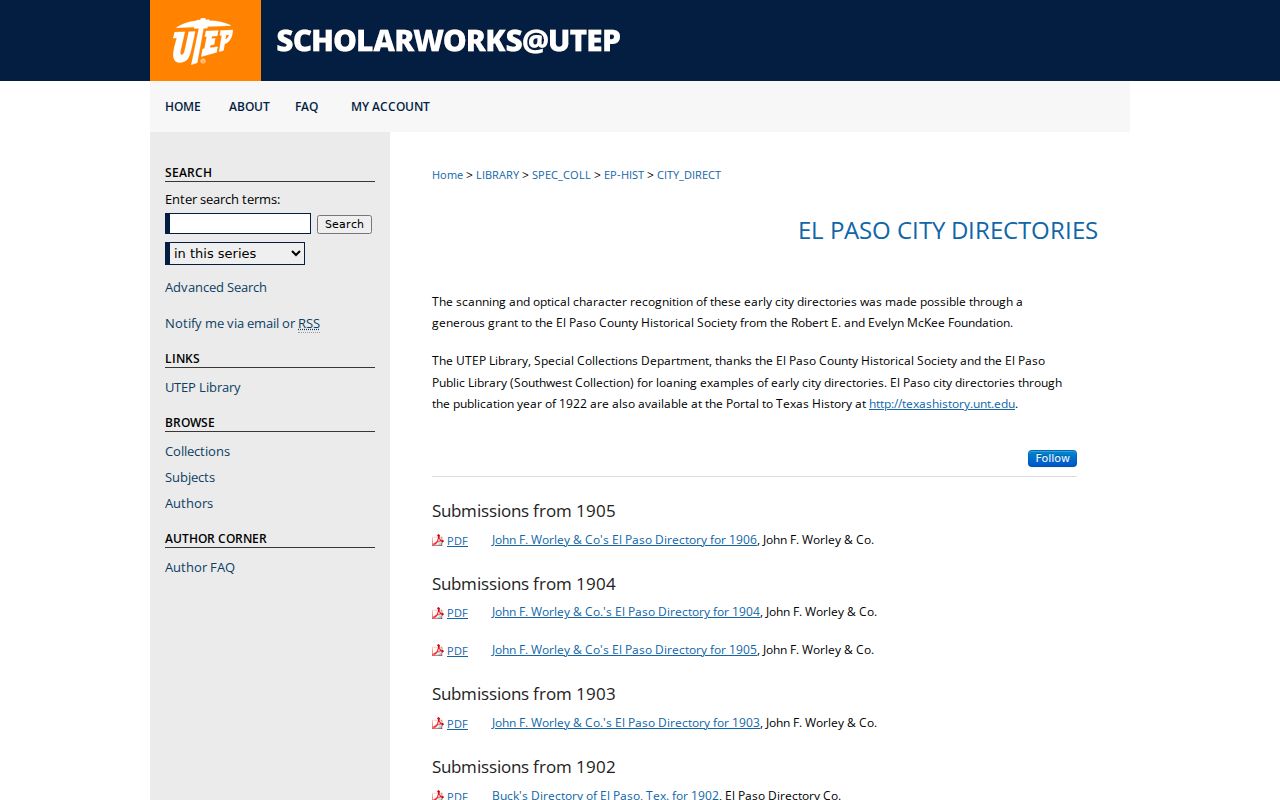
Use the collection page to move from an OCR hit to the actual page image, then preserve the volume title and page number with the name.
Socorro City Directory Clues in 1922
The 1922 Hudspeth Directory Co. volume is a practical example of why a city directory offers more than an alphabetic name list. The 962-page book includes citizens, business and professional listings, corporations, a street directory, government, church, school, society material, classified pages, and a Buyer’s Guide. A personal listing can be checked against the street section, while a surname can also be searched in business or classified pages. That helps distinguish a residence from a place of business and can reveal an address change within the same publication.
This is a useful human-use trail for a family or house-history question. The street pages can list an address number, an occupant or business, intersections, and a “Vacant” notation. “Vacant” is evidence that the volume recorded a change at that location, not evidence that a later household had no connection to it. It is also a reminder that an old address needs a date before it can be compared with a deed, census, or modern parcel.
The 1922 street-directory sample displays the street-order format used to place occupants and businesses along an address sequence.
Check an address in both the street section and the personal pages, since the two views can supply different clues about the same dated entry.
Note: A directory entry may identify a head of household or business contact rather than every person living at that address.
Socorro City Directory Research Desk
The El Paso Public Library's Border Heritage Center is the most useful public-library stop after an online search. Formed from Southwest, Genealogy, and Raza collections, it holds city directories, historical maps, census material, cemetery and vital-record indexes, high-school yearbooks, local and regional vertical files, plus El Paso Times and Herald-Post microfilm and fiche. The genealogy materials are reference-only, so the collection is designed for consultation rather than checkout. Staff assistance is available in person or remotely at (915) 212-3218 and libborder@elpasotexas.gov.
Border Heritage also gives the directory trail an endpoint. Heritage Hub is identified by the library as an obituary and death-notice resource with original images, although access depends on a library card or database login. Use a dated address and directory citation when asking for help. A narrow request for a volume, surname, issue date, or map is more practical than a request for every record connected with a household.
Border Heritage introduces the regional genealogy, map, newspaper, and directory resources available through the library.
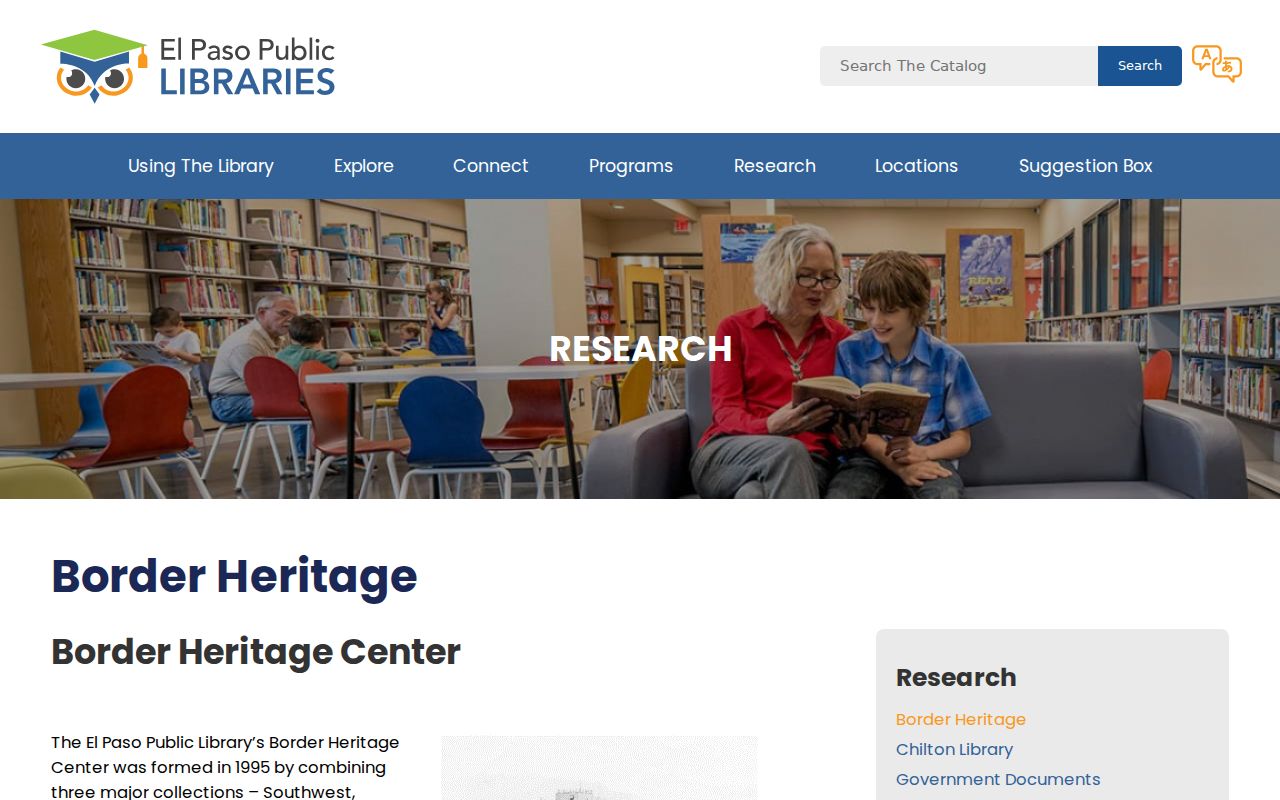
The reference desk, microfilm, maps, and local files can supply a second source when a digitized city directory is incomplete or ambiguous.
Socorro City Directories Beyond the Screen
The El Paso County Historical Society provides the longer physical collection context. Its collections page reports more than 20,000 digitized photographs from the 1880s forward, more than 50 scrapbooks, family and business records, maps from 1859 through the 1980s, more than 500 school annuals, and city directories reported from 1886 through 2011. The Burges House book list identifies directories from 1886–1922 and selected Polk runs afterward, including holdings across 1947–59, 1960–2000, and 2003. Current reading-room hours, lookup service, and reproduction costs were not confirmed in the source material, so contact the collection before planning a visit.
The two collections complement one another. UTEP is the efficient starting point for digitized early El Paso volumes. The Historical Society is stronger for physical directories, photographs, maps, annuals, family records, and scrapbooks that can explain a name or address outside the printed listing. The Texas State Library directory collections are primarily an on-site Austin route, and staff does not search or transcribe by phone or email. A directory is best read as one piece of a local record set, especially when Socorro's regional labels, annexation history, and changing transportation routes complicate a modern address match.
The Historical Society collections document the directory, map, scrapbook, photograph, and annual holdings that can extend a Socorro search.
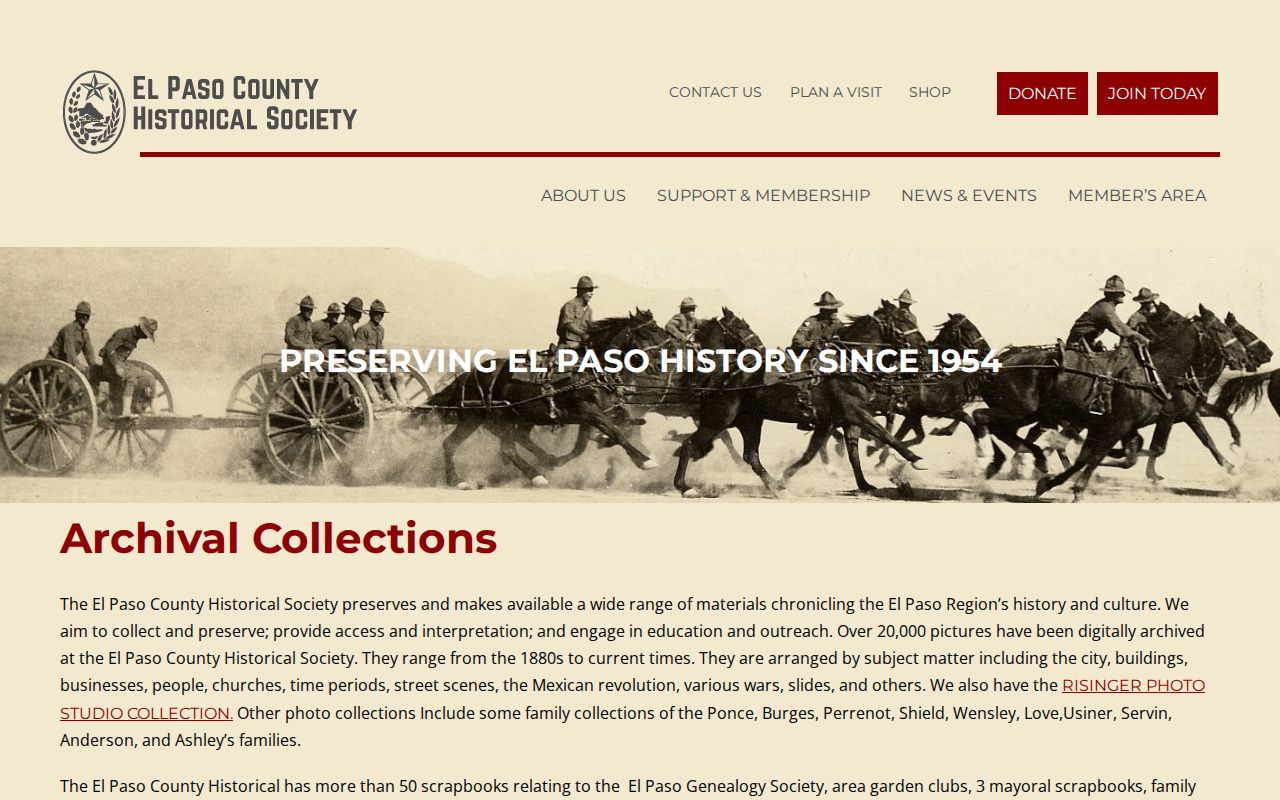
Bring the volume year, surname variants, street name, and known dates so the archival material can be matched to a specific question.
Reading a Socorro City Directory Entry
Read the whole line before extracting a name. In the 1922 sample, an entry such as “Lander Robert, pres Lander Lumber Co, r 2923 Silver, phone Main 8912” combines a name, title, employer, residence notation, street address, and telephone. Nearby lines may reveal alternate spellings. Some volumes use Mrs. or Miss, a widow notation, initials, or a spouse reference. The front matter is important because abbreviations vary by publisher and year. A business address should never be converted into a home address without another source.
| Name | Person, initials, honorific, or surname form printed in that volume. |
|---|---|
| Occupation or title | Work description, office, employer, or role, when printed. |
| Residence notation | r can mark residence or rooms; confirm the volume's key. |
| Street section | Address number, occupant or business, intersections, and sometimes “Vacant.” |
| Telephone or family notation | A period-specific contact or relationship clue, not a current contact method. |
- Criss-cross directory
- A reverse listing arranged by street and number, useful for seeing the printed occupant or business at an address.
- Householder entry
- An entry that identifies the named person or household contact, which may leave other residents unlisted.
- Abbreviation key
- The publisher's explanation of shortened terms, usually near the front matter; consult it before expanding a mark.
Socorro city-directory research also benefits from name variations. Spanish compound surnames, accents, alternate spacing, initials, married names, and anglicized spellings can divide the same family across an index. Compare an address, spouse, employer, occupation, or legal-description clue before treating two similar names as the same person.
Socorro Directory Geography Changes
Socorro's older record geography does not always resemble the current city map. The community's mission, irrigation, and acequia history predates the modern municipal pattern. The 1881 railroad bypass shifted regional power toward El Paso, and the city records a population collapse followed by later growth. In 1985, opposition to a possible El Paso annexation led to reincorporation. These changes can affect how a place is named in directories, maps, newspapers, postal records, and council files.
Colonias and older agricultural routes add another practical issue. A historical road, acequia, farm lane, or informal colonia name may not match a present street label. When an old directory address is hard to place, preserve its wording, then compare historical maps, plats, legal descriptions, City Clerk annexation records, and newspaper references. Do not invent a street-renumbering date: no official schedule was located in the research. Geography is the bridge, not a reason to force an old listing into a current address.
Note: A legal description or plat can remain useful even when a printed street name has changed or disappeared.
Trace Socorro City Directory Households
A household trace starts with the earliest directory hit that can be tied to a second fact, such as a spouse, occupation, employer, street, or telephone. Follow the name through later available volumes and write down every address variation. Next, search the address in the street section to see whether the same person, a business, another household, or a vacancy appears there. The regional collections are covered in detail here because the method depends on comparing several dates rather than treating one listing as a complete life record.
- Find the first reliable name or address appearance and save the volume year and page.
- Search consecutive available directory years, noting moves, spelling changes, spouse references, employers, and phone details.
- Check the same street and number in the street or criss-cross section for an occupancy clue.
- Pair nearby directory years with the 1900, 1910, 1920, 1930, 1940, or 1950 federal census as the dates allow.
- Use Border Heritage newspapers, obituary notices, probate material, and cemetery indexes to test whether a disappearance reflects a move, death, or an unlisted household.
A disappearance does not have one fixed meaning. A household may have moved, been missed, used a business address, changed a surname form, or fallen outside the volume's coverage. When the question becomes present-day parcel or ownership research, the modern address records belong with the Socorro Street Directory workflow, which uses EPCAD and County Clerk sources rather than historical directory pages.