
Socorro Neighbors Public Block Sources
Public records can describe the block around a Socorro address without becoming a household roster. EPCAD and its GIS route connect a parcel to an account, GeoID, owner or address lead, and mapped geometry. County recorded documents can add lot, block, plat, easement, or transfer context. Elections material can explain precinct and district boundaries, but the name-and-date-of-birth lookup is not a block search. Historical street sections may preserve an old occupant, business, intersection, or “Vacant” note, yet they are publication snapshots rather than current proof.
Keep “adjacent parcel” separate from “neighbor.” A parcel owner may use a different mailing address, and a parcel record does not name every occupant. Renters, household members not named in public records, private utility customers, protected voters, delivery records, and sealed case parties are not block-search material. The useful result is a documented public-record lead with its source and date.
| Socorro block source | What it can show | Access route |
|---|---|---|
| EPCAD and parcel GIS | Parcel geometry, account, GeoID, owner/address lead, and some district context | Property search and GIS viewer |
| County recorded records | Lots, blocks, plats, roads, easements, and dated transfers | County Clerk records search |
| County voter file | Releasable registration, mailing-address, district, and history fields | Written Elections request under Chapter 18 |
| City district maps | Four council districts and representative geography | City maps |
| Street directories | Historic number-by-number occupant, business, or vacancy clues | Library, UTEP, and Portal collections |
| HOA certificates and civic routes | Association-management filing or public participation contact | State search and City programs |
Socorro Neighbors Adjacent Parcels
The practical Socorro neighbors method is map-first. Search the subject address in EPCAD, save the account or GeoID from the result, then use the parcel map to inspect the polygons beside it. Repeat the property search for each adjacent account. The research confirmed the EPCAD GIS route as the map resource, but its current identify, select, buffer, measure, and export controls were not visible in the text-only inspection. Use an available control only after the live viewer labels it, and do not promise a radius export that the current screen may not offer.
Geometry shows land divisions. It does not identify a household. Parcel results should be described as owner or address leads unless a record plainly labels the field. The property situs is the location represented by the geometry and legal description. An owner mailing address can be elsewhere, can be a business or post-office box, or can point to a separate parcel.
- Search the exact Socorro address in EPCAD and save the displayed account, GeoID, tax year, and address form.
- Open the related GIS route and inspect the subject polygon and immediately adjoining polygons.
- Return each adjacent account or GeoID to EPCAD and record only the public parcel fields shown there.
- Use a plat or County Clerk record where lot, block, easement, or transfer context is needed.
- Switch to the Socorro street directory only when the question expands from one block to a whole named street.
Socorro Neighbors District Geography
Socorro’s four council districts add a civic geography layer to a block search. A district map can help explain which representative, meeting record, or planning discussion applies to an address. It does not reveal the identity of neighbors or prove a person’s residence. Compare the city map with the parcel and exact delivery address, particularly near an edge where postal, city, and county labels can diverge.
The City of Socorro district maps provide the municipal reference used for that geographic check.
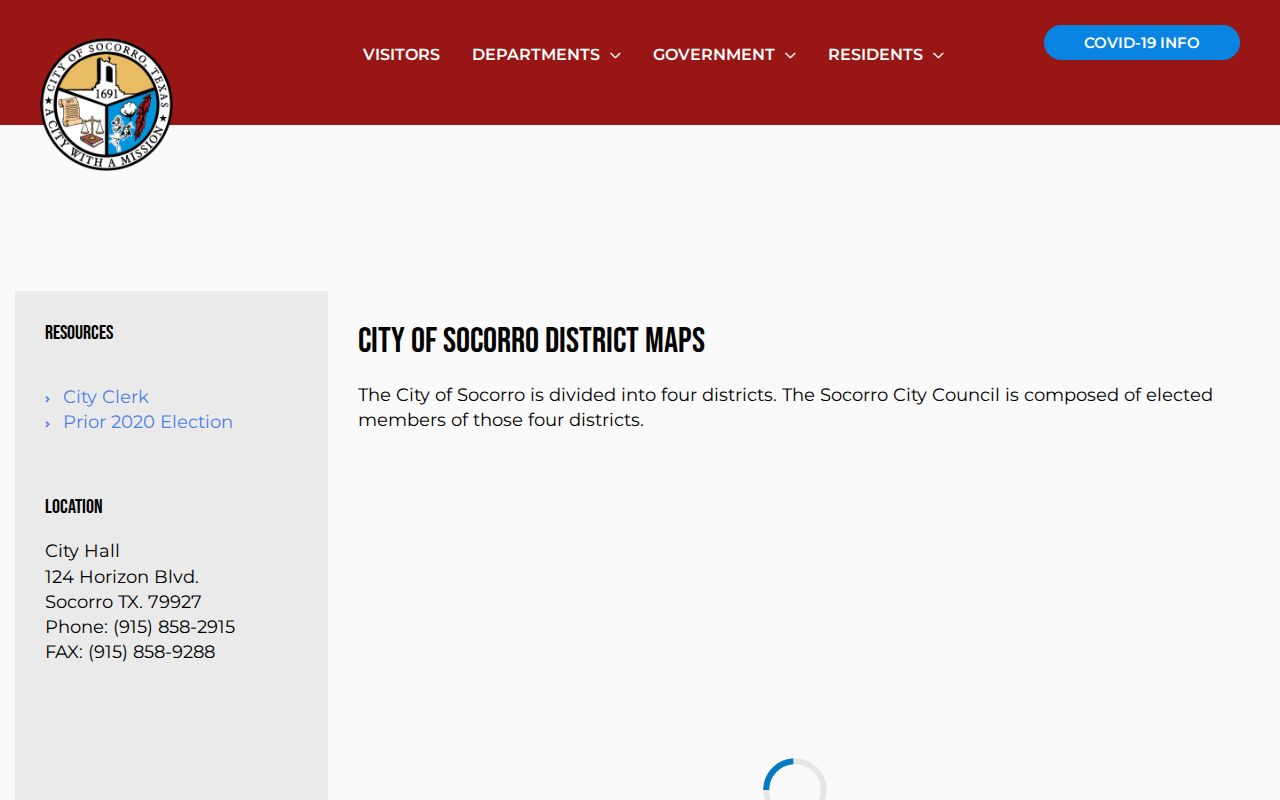
Use the map to identify a district or public meeting context, then consult the City Clerk for a focused agenda, ordinance, annexation, or public-notice record tied to a date and subject.
Socorro Neighbors Voter File Boundaries
El Paso County’s public registration lookup is a confirmation tool for one person, not a way to list Socorro neighbors on a block. Its name route uses first name, last name, and date of birth, with a VUID dashboard alternative. County voter-file requests can cover releasable registration and mailing-address fields, districts, registration dates, and history, but they require a written request and prepaid handling. Texas Election Code Chapter 18 limits the use of voter lists and excludes sensitive fields from ordinary public outputs.
Telephone numbers, email, Social Security numbers, Texas driver or DPS identifiers, full dates of birth, and protected addresses are not public voter-file fields. A confidential voter may be absent from an ordinary match or represented by a protected display. District assignments are administrative facts, not a reason to publish a household list.
The El Paso County Elections contact route leads to the office that handles voter information requests and street-master context.
The Elections office can explain its current request forms and the street master’s district purpose without converting protected voter data into a block roster.
Socorro Neighbors Community Contacts
Socorro does not publish a centralized neighborhood-association directory or member roster. That absence matters. The defensible route is to identify an association or civic program through an official filing, a recorded subdivision covenant, City boards, or Police outreach, then use the public contact supplied by that organization. The Texas HOA Management Certificate Search can be queried by association name, county, city, or ZIP. Its result is a management-certificate lead, not a roster of members or an invitation to infer who lives nearby.
The Texas HOA Management Certificate Search is the state source for a Socorro-area association-management filing.
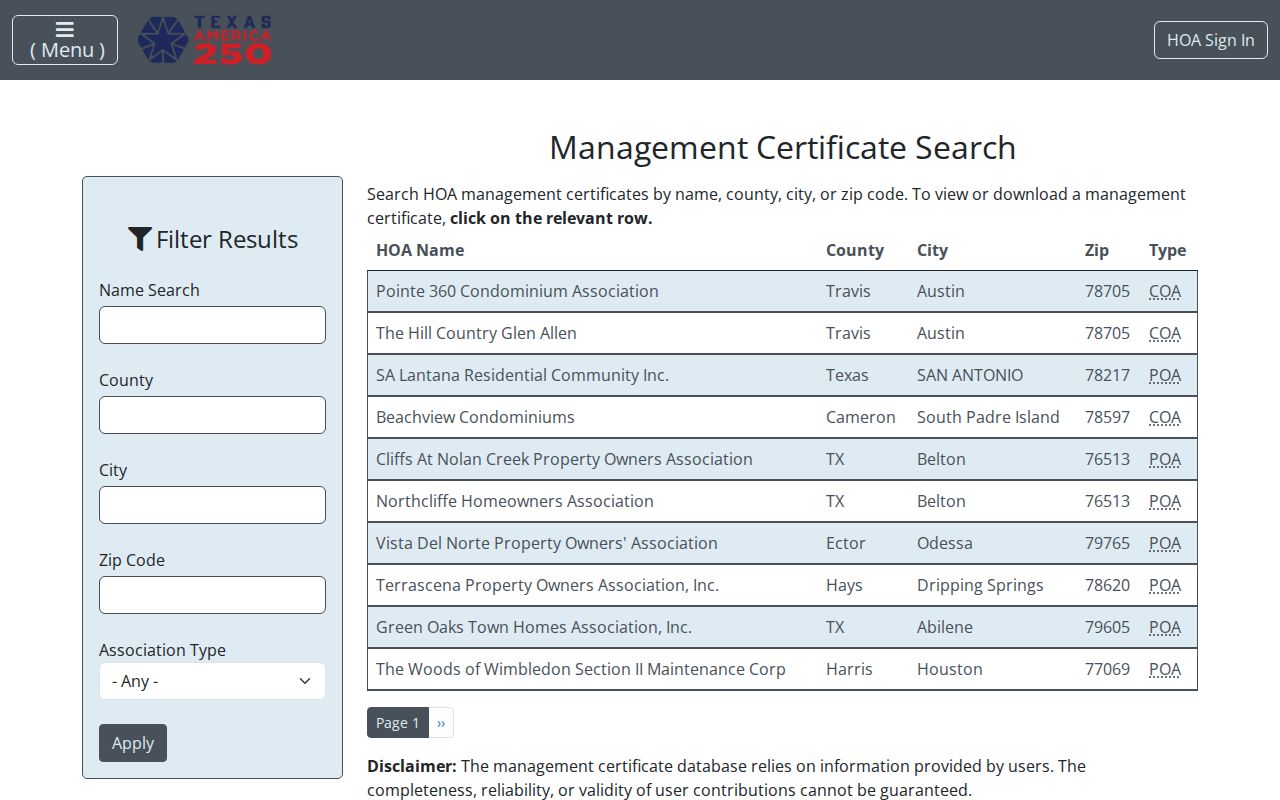
Use a filing to find a legitimate governance or management contact, then respect any record-access limits stated by that association or custodian.
| HOA certificate route | State search by city, county, ZIP, or known association name; it is not a member list. |
|---|---|
| Recorded covenants and plats | County Clerk materials that can identify subdivision governance documents and parcel layout. |
| City boards and commissions | Public meeting contacts, agendas, and minutes for civic participation rather than household information. |
| Neighborhood Watch | A City Police participation program, not a directory of current residents. |
Socorro Neighbors Watch Programs
Socorro Police describes Neighborhood Watch as a community participation and safety program. It can connect people to public outreach, not supply a list of neighbors. The Citizen Police Academy also requires an application and release or waiver. Neither program is evidence that someone lives at an address, belongs to a household, or wants unsolicited contact. Historical Society scrapbooks and Border Heritage files can likewise preserve past clubs, school activities, and neighborhood stories without verifying present membership.
The Socorro Police community outreach page shows the official Neighborhood Watch context.

Public outreach gives a block a civic contact route, while parcel and Clerk records remain the better sources for carefully dated property facts.
For a Socorro block question involving a meeting, ordinance, drainage project, street work, or annexation line, the City Clerk is the municipal records hub. A focused NextRequest or clerk request should identify the address or corridor, the date range, and the document type. Planning and Zoning permits and Code Enforcement files can be address-keyed, but the City did not expose a public case-search interface for either. A request can seek a specific released file without turning a civic program into a search for private household details.
Socorro Neighbors in Historic Street Records
Historic street sections can give a Socorro block a time layer. The 1922 El Paso directory’s street pages include addresses, intersections, occupants or businesses, and “Vacant” entries. Those details can help identify a past address form before a deed, obituary, or city record is requested. They do not establish who lives there now. Rural, colonia, or regional addresses may have been omitted, and an entry may name a business or head of household rather than all people at the number.
For older parcels, preserve the printed street number and city label, then compare the legal description, plat, City Clerk annexation material, and parcel geometry. Socorro’s acequia, mission, colonia, and annexation history can make a current street address a poor substitute for the historic tract. The safest bridge is a dated record trail, not an assumption from proximity.
Socorro Neighbors Official Record Comparison
Official records and commercial neighbor tools answer different questions. The official sources identify their custodian, fields, dates, and legal limits. Commercial tools often combine public indexes, marketing information, address history, and purchased datasets. Their entries may be stale, merged with a same-name person, or detached from the parcel date. A Socorro neighbors question is better served by an official source for the narrow fact being tested.
| Source type | Strength | Limit |
|---|---|---|
| Official parcel, Clerk, Elections, or City record | Named custodian and traceable record purpose | May be incomplete, dated, restricted, or require a request |
| Commercial compiled profile | May surface a broad lead | Can be stale, mismatched, and not proof of residence or identity |
Socorro Neighbors Privacy Limits
Some information about a block must remain private even where parcel geometry is public. Private utility use, delivery history, motor-vehicle personal information, renters, unlisted household members, protected voters, sealed court parties, and confidential-address participants are outside a lawful neighbors search. Texas’s Address Confidentiality Program gives eligible survivors a substitute mailing address and forwarding service. It is not a public lookup, and old public material should not be republished as a current residence claim.